
There’s something truly transformative about creating your own homemade kimchi—it’s like crafting a little jar of magic right in your kitchen! As the crisp Napa cabbage mingles with aromatic garlic and ginger, not to mention the vibrant heat from Gochugaru, my senses are alight with anticipation. When I first took the leap into fermenting my own kimchi, I wasn’t just excited about the flavors; I craved a healthier, gut-friendly alternative to takeout meals. Plus, the versatility of this tangy side dish means I can tailor the spice levels to suit my mood or add in a splash of sweetness with Asian pears, turning a simple recipe into something uniquely mine. Join me on this journey to create a fermented delight that not only enhances your meals but doubles as a conversation starter at your next dinner party!

Why is Kimchi Recipe Homemade so special?
Flavor Explosion: Homemade kimchi bursts with vibrant flavors, a symphony of spicy, tangy, and umami notes that store-bought varieties can’t match.
Endless Customization: Feel free to personalize your recipe! Adjust spice levels or add unique ingredients like Asian pears to make it your own.
Gut-Friendly Goodness: Packed with probiotics, this dish nourishes your digestive health while keeping you feeling light and energized.
Simplicity is Key: With just a few fresh ingredients and simple steps, anyone can master this delightful fermentation process.
Crowd-Pleasing Side: Serve it with rice bowls, tacos, or even as a unique topping for your next burger, and watch your guests be amazed!
Kimchi Recipe Homemade Ingredients
Unlock the secrets of vibrant kimchi!
For the Kimchi Base
• Napa cabbage – This forms the crunchy backbone of your kimchi; look for fresh, crisp heads.
• Coarse sea salt or kosher salt – Helps draw moisture from the cabbage, promoting fermentation; avoid any additives.
• Daikon radish – Adds delightful crunch and a touch of sweetness when cut into matchsticks.
• Carrot – Introducing natural sweetness and color; slice it into matchsticks to mix evenly.
• Scallions – Both the white and green parts contribute moisture and a mild onion flavor.
For the Fermentation Flavor
• Garlic – Fresh, peeled garlic gives the kimchi its pungent depth; opt for whole bulbs instead of jarred.
• Ginger – Freshly peeled ginger enhances the aromatic and spicy quality of your kimchi.
• Gochugaru (Korean chili flakes) – Provides heat and vibrant color; customize your spice level based on preference.
• Granulated sugar – A pinch balances the flavors and supports the fermentation process.
• Fish sauce – Adds a rich umami depth; for a vegetarian version, consider soy sauce or miso as a substitute.
Each ingredient brings its unique character to this kimchi recipe homemade, giving you the creative freedom to craft a flavor-packed masterpiece!
How to Make Kimchi Recipe Homemade
Prepare the cabbage: Begin by cleaning and cutting the Napa cabbage into quarters. Generously salt it, massaging the salt into the leaves until they begin to wilt. Let it drain for 1-2 hours, then rinse well to remove excess salt.
Combine ingredients: In a large mixing bowl, combine the drained cabbage with matchstick-cut daikon, carrot, sliced scallions, minced garlic, grated ginger, Gochugaru, sugar, and fish sauce. Mix everything thoroughly, ensuring all the vegetables are well coated.
Ferment: Pack the mixture tightly into a fermentation crock or jar, pressing down to ensure it’s submerged in its liquid. Cover loosely and store in a cool, dark place. Allow it to ferment for 4-7 days, checking daily for flavor and to release any built-up gas.
Refrigerate: Once the kimchi reaches your desired level of tanginess and flavor, transfer it into smaller jars. Press down to keep vegetables submerged under the liquid, then seal and store them in the refrigerator.
Optional: Serve your kimchi with a sprinkle of sesame seeds for an added crunch!
Exact quantities are listed in the recipe card below.
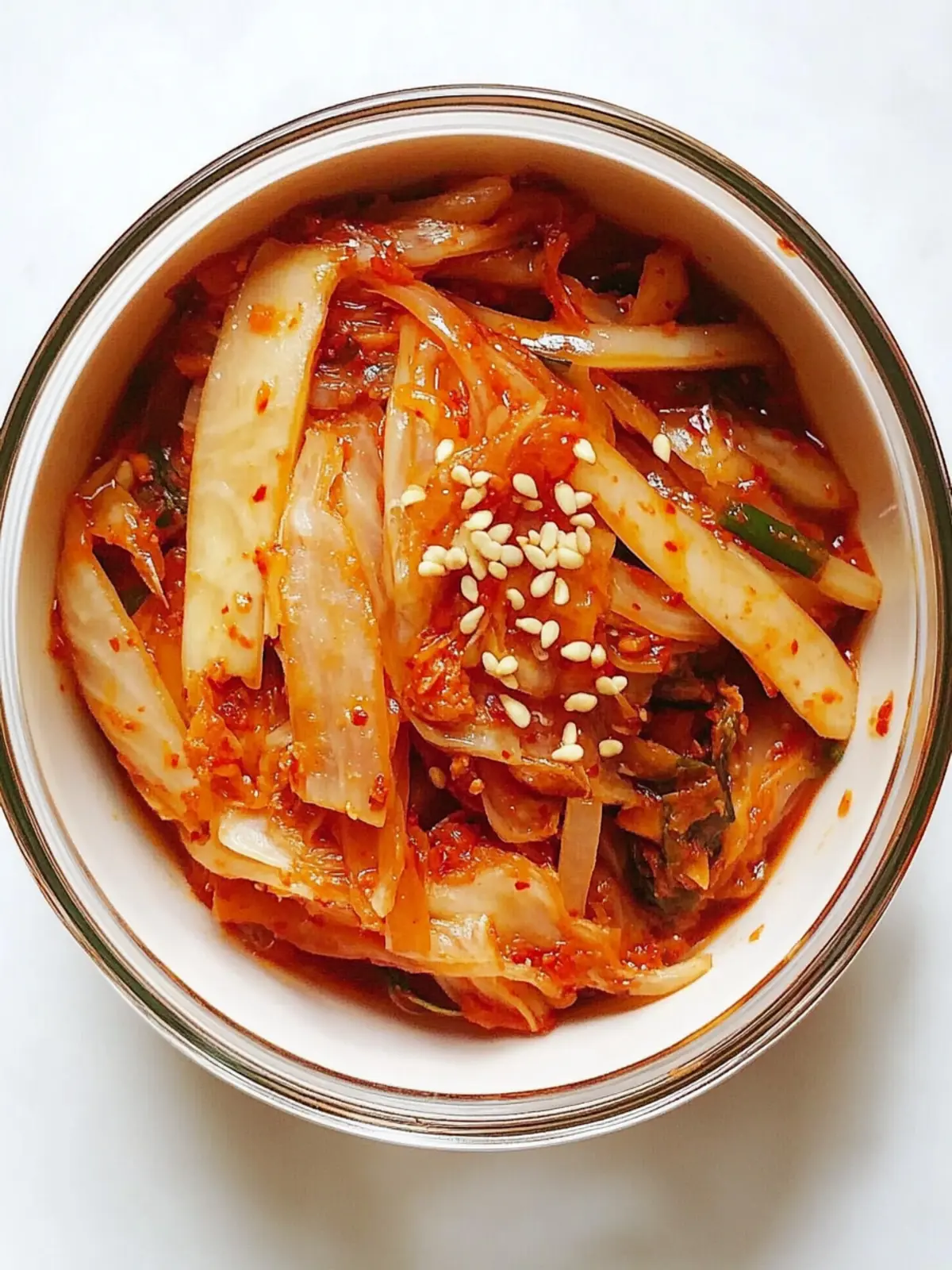
How to Store and Freeze Kimchi
Fridge: Store your homemade kimchi in an airtight container in the refrigerator, where it will stay fresh for up to 3 months, with flavors deepening over time.
Freezer: For longer storage, you can freeze kimchi in freezer-safe containers for up to 6 months. Note that texture may change upon thawing, making it best used in cooked dishes.
Reheating: If using frozen kimchi, simply thaw in the refrigerator overnight. Reheat gently on the stovetop, if desired, to restore some crunch and flavor.
Room Temperature: Fermented kimchi can be kept at room temperature for 1-2 days for enhanced flavor development, but should be refrigerated afterward to avoid spoilage.
Make Ahead Options
Homemade kimchi is a fantastic choice for meal prep, saving you valuable time during busy weeknights! You can prep the Napa cabbage by salting and draining it up to 24 hours in advance; just be sure to rinse it thoroughly before combining it with the other ingredients to prevent excess saltiness. Additionally, you can chop all the vegetables—daikon, carrots, and scallions—up to 3 days ahead. When you’re ready to create your kimchi recipe homemade, mix the prepped ingredients with garlic, ginger, Gochugaru, sugar, and fish sauce. Pack it into your fermentation jar, let it ferment for the recommended time, and then refrigerate. This way, you’ll enjoy that homemade delight just as fresh and tangy as ever!
Kimchi Recipe Homemade Variations
Feel free to make this kimchi recipe your own! With a few tweaks, you can unlock exciting flavors and textures.
Spicy Boost: Increase Gochugaru for a fiery kick, or add minced fresh chili peppers for an extra level of heat. Your tastebuds will dance with every bite!
Sweet Touch: Stir in finely chopped Asian pear or a spoonful of honey for a natural sweetness that beautifully balances the tangy flavors.
Extra Crunch: Toss in some julienned cucumber or sliced radishes to enhance the crunch and add unique flavors to your kimchi. Texture is key in this delightful dish!
Herbaceous Delight: Add fresh herbs like cilantro or mint for a refreshing twist. It’ll brighten up the traditional flavor profile and bring a new dimension to your palate.
Vegan Version: Substitute fish sauce with soy sauce or miso for a punchy umami flavor that keeps the dish plant-based. It’s just as satisfying!
Colorful Variations: Throw in other veggies like red bell peppers or purple cabbage for a vibrant and visually appealing kimchi. Your creation will be a feast for the eyes!
Garlic Lovers: Increase the amount of garlic to amplify the punch and aroma. For garlic enthusiasts, it’s a flavor explosion!
Fermentation Experiment: Let ferment in smaller batches to experiment with different tanginess and sour notes—every jar can have a unique personality! This is all part of the fun.
What to Serve with Kimchi Recipe Homemade?
Create a delightful meal that harmonizes with the tangy goodness of your homemade kimchi!
- Steamed Rice: Fluffy white rice balances the bold flavors of kimchi, providing a comforting foundation for your meal.
- Savory Korean Tacos: Soft tortillas filled with marinated meats and topped with kimchi offer a fusion twist, igniting your taste buds in every bite.
- Grilled Miso Eggplant: The smoky sweetness of grilled eggplant pairs fabulously with kimchi, introducing a delightful contrast to its crunchiness.
- Spicy Kimchi Fried Rice: Leftover rice meets sautéed veggies and a splash of soy sauce, resulting in a comforting dish that’s both spicy and satisfying.
Crispy smashed potatoes drizzled with sesame oil make for a delightful side that’s wonderfully creamy on the inside with a golden exterior.
- Korean Fried Chicken: A crispy bite of chicken glazed with a spicy-sweet sauce complements the tang of kimchi, creating a perfect balance.
- Banchan Variety: Offer a selection of traditional Korean side dishes like pickled radishes, seasoned spinach, or mung bean pancakes for vibrant variety.
Embrace the excitement of mixing flavors and let your homemade kimchi shine alongside these irresistible dishes!
Expert Tips for Kimchi Recipe Homemade
Choose Quality Ingredients: Fresh, high-quality veggies are essential for the best kimchi recipe homemade; avoid wilted or damaged produce to ensure optimal flavor and texture.
Fermentation Process: Monitor your ferment daily and burp the jars gently to release carbonation; neglecting this can lead to overflow or undesirable sourness.
Submersion is Key: Always keep your cabbage submerged in the liquid. If you notice mold on top, it indicates the veggies weren’t fully submerged—this can alter the fermentation.
Customize Spice Levels: Adjust the amount of Gochugaru to fit your heat preference. Start small; you can always add more if you crave extra spice!
Taste as You Go: The beauty of homemade kimchi is in the tasting! Check the flavor daily during fermentation for tang and spice that suits your palate.
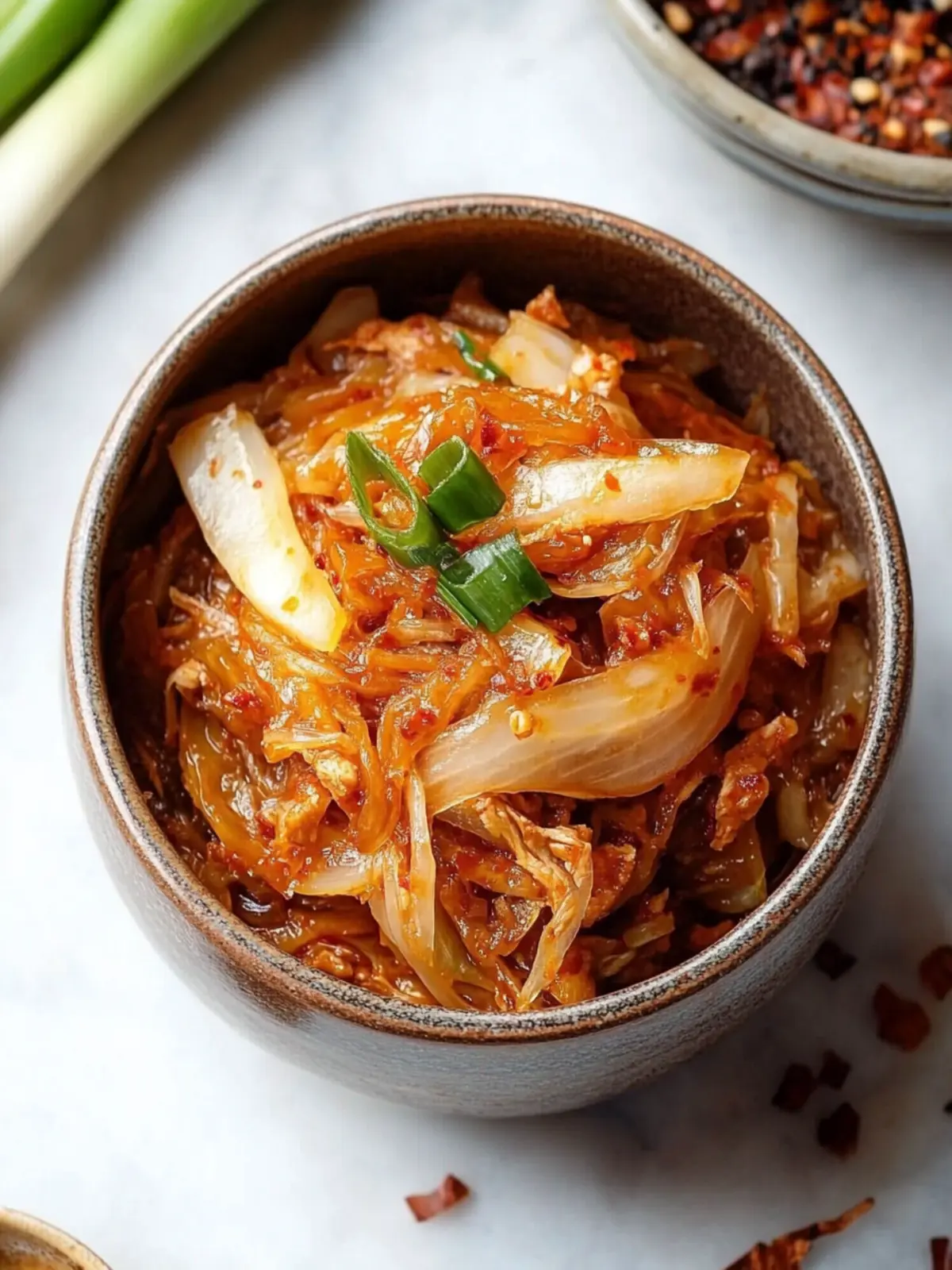
Kimchi Recipe Homemade Recipe FAQs
What should I look for when selecting Napa cabbage?
Absolutely! When choosing Napa cabbage, look for heads that are firm, crisp, and free from dark spots or wilting. Freshness is key to achieving that delightful crunch in your kimchi.
How long can I store homemade kimchi in the fridge?
You can store your homemade kimchi in an airtight container in the refrigerator for up to 3 months. Over time, the flavors will deepen and develop further, enhancing the traditional tanginess of the dish.
Can I freeze kimchi, and how do I do it properly?
Yes, you can freeze kimchi! To do this, transfer it to freezer-safe containers. Ensure the containers are filled to minimize air exposure, which can affect texture. It can be stored for up to 6 months. Remember, the texture may change upon thawing, so use the thawed kimchi in cooked dishes for the best results.
What if my kimchi ferments too quickly or develops off-flavors?
If your kimchi ferments too quickly or develops off-flavors, it might be due to warmer temperatures. To prevent this, always store your kimchi in a cooler, dark place during fermentation. If you notice any unusual smells or appearance, it’s best to check for signs of spoilage—like fuzzy mold on the surface—and consider discarding it if in doubt.
Can I make this kimchi recipe vegetarian-friendly?
Very! To make a vegetarian-friendly version of this kimchi recipe, simply replace fish sauce with an equal amount of soy sauce or miso paste. This keeps the umami richness while ensuring it’s friendly for vegetarian diets. Enjoy customizing it!
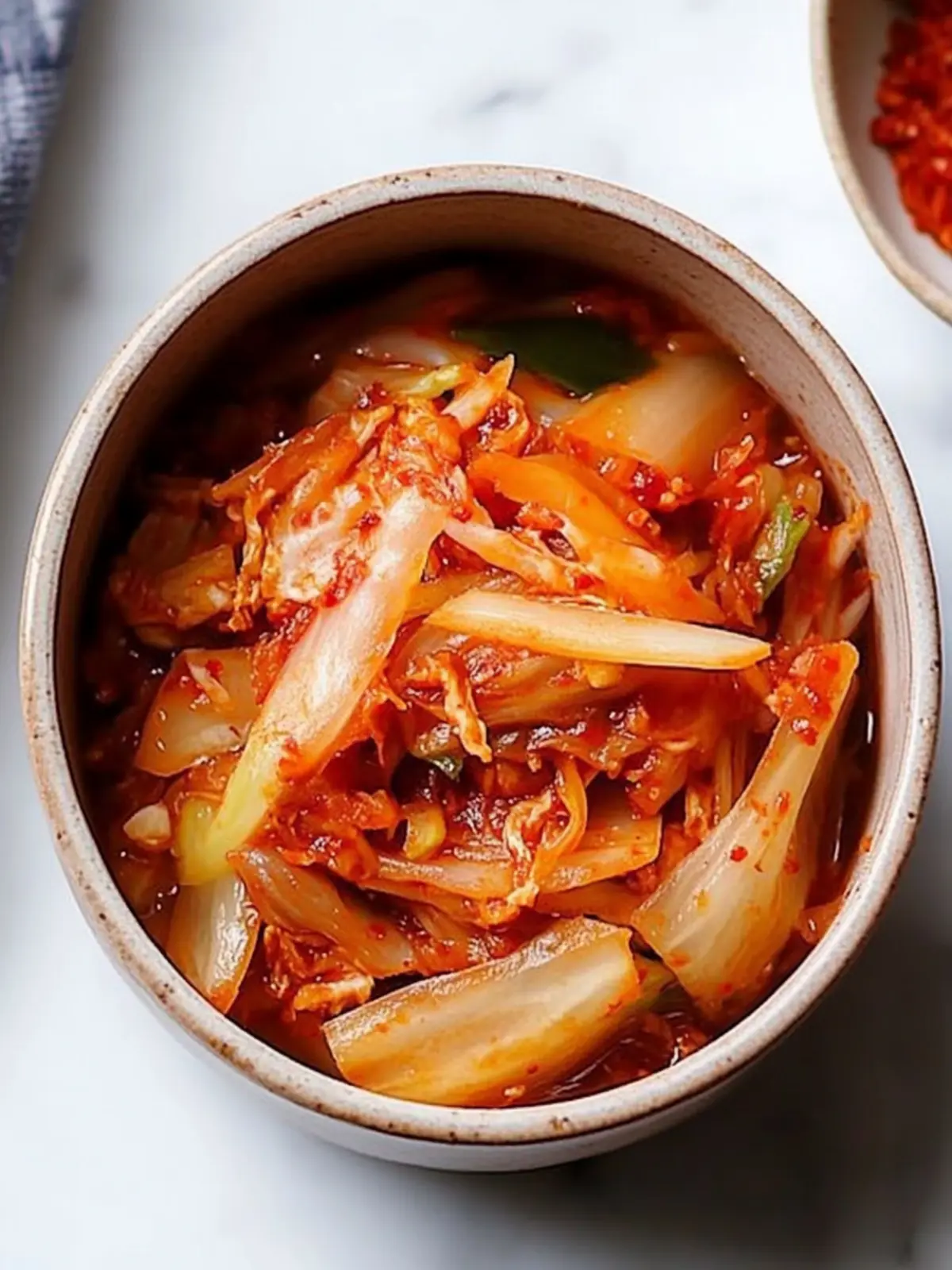
Kimchi Recipe Homemade: Your Guide to Tangy Flavor Awesomeness
Ingredients
Equipment
Method
- Prepare the cabbage: Begin by cleaning and cutting the Napa cabbage into quarters. Generously salt it, massaging the salt into the leaves until they begin to wilt. Let it drain for 1-2 hours, then rinse well to remove excess salt.
- Combine ingredients: In a large mixing bowl, combine the drained cabbage with matchstick-cut daikon, carrot, sliced scallions, minced garlic, grated ginger, Gochugaru, sugar, and fish sauce. Mix everything thoroughly, ensuring all the vegetables are well coated.
- Ferment: Pack the mixture tightly into a fermentation crock or jar, pressing down to ensure it's submerged in its liquid. Cover loosely and store in a cool, dark place. Allow it to ferment for 4-7 days, checking daily for flavor and to release any built-up gas.
- Refrigerate: Once the kimchi reaches your desired level of tanginess and flavor, transfer it into smaller jars. Press down to keep vegetables submerged under the liquid, then seal and store them in the refrigerator.