
There’s something incredibly rejuvenating about a bowl bursting with colors and flavors, isn’t there? Imagine scooping up a spoonful of roasted sweet potatoes paired with crunchy radishes and creamy tahini sauce — it’s like a delicious hug for your taste buds! I first encountered this vibrant vegan Buddha bowl during one of my weekend meal preps, and it was love at first sight. Not only does it look impressive, but it’s also a nutrient-packed powerhouse that checks all the boxes for a satisfying meal.
As summer wraps its warm arms around us, fresh produce is bursting at the seams, making it the perfect time to whip up this delightful dish. Whether you’re looking to jazz up your weeknight dinners or meal prep for busy days, this Buddha bowl recipe is versatile enough to let your creativity shine. With customizable ingredients, you can easily put your unique spin on it while still enjoying the wholesome goodness that each bite delivers. So let’s get cooking and elevate your dining experience!

Why is this buddha bowl recipe a must-try?
Colorful Appeal: This Buddha bowl is visually stunning, showcasing a rainbow of fresh ingredients that make healthy eating exciting.
Nutrient-Packed: Each component is carefully selected to maximize vitamins and minerals, ensuring balanced nutrition in every bite.
Simple Prep: With minimal cooking required, this dish can effortlessly fit into your busy schedule, making it perfect for meal prep.
Customizable: Tailor it to your taste! Swap grains or veggies based on what you have on hand or what’s in season.
Satisfying Flavor: The combination of roasted sweet potatoes, crunchy radishes, and creamy tahini creates a delightful symphony of textures and tastes.
Discover more ideas to elevate your meals with our flexible meal prep tips.
Buddha Bowl Ingredients
• A cozy dish begins with the right ingredients!
For the Base
- Large Sweet Potato – Adds a hearty base and natural sweetness; substitute with butternut squash for a similar flavor.
- Cooked Brown Rice (or Quinoa) – Serves as the grain foundation for the bowl; quinoa is a great gluten-free alternative.
For the Veggies
- Watermelon Radish (or Red Radishes) – Adds a peppery crunch and color; substitute with regular radishes if unavailable.
- Medium Carrots – Provides sweetness and crunch; can also use parsnips for a different flavor profile.
- Shredded Red Cabbage – Adds fiber and crunch; Savoy cabbage can be used as an alternative.
- Kale Leaves – Offers a nutritious green base; spinach can be used if preferred.
For Protein
- Cooked Chickpeas (or Lentils) – Provides protein and texture; black beans can be substituted for a different taste.
- Sauerkraut (or Other Fermented Veggie) – Adds probiotic benefits and a tangy flavor; kimchi can be an alternative.
For Flavor Enhancements
- Extra-Virgin Olive Oil – Used for roasting veggies to enhance flavor; can replace with avocado oil for a higher smoke point.
- Lemon Wedge – For squeezing fresh juice over ingredients, enhancing flavor; substitute with lime juice for a different citrus note.
- Turmeric Tahini Sauce – Offers creaminess and flavor, crucial for the assembly; mix turmeric and tahini for the sauce.
For Garnish
- Sesame Seeds (or Hemp Seeds) – For garnish and added nutrition; chia seeds can be a substitute.
- Microgreens (optional) – For additional flavor and nutrients; can be replaced with sprouts.
These ingredients come together beautifully in this Buddha bowl recipe, combining freshness and nutrition in every delicious bite!
How to Make Buddha Bowl Recipe
Preheat your oven to 400°F and line a baking sheet with parchment paper, ensuring a non-stick surface for those delightful sweet potatoes.
Toss cubed sweet potatoes with extra-virgin olive oil, salt, and pepper. Spread them out on the baking sheet, roasting for about 20 minutes until they’re golden brown and tender.
Slice watermelon radish thinly and use a vegetable peeler to create beautiful ribbons from the carrots. Toss both with lemon juice to enhance their flavors and keep them vibrant.
Massage kale leaves with lemon juice and a sprinkle of salt until they become soft and wilted, creating a deliciously tender base for your bowl.
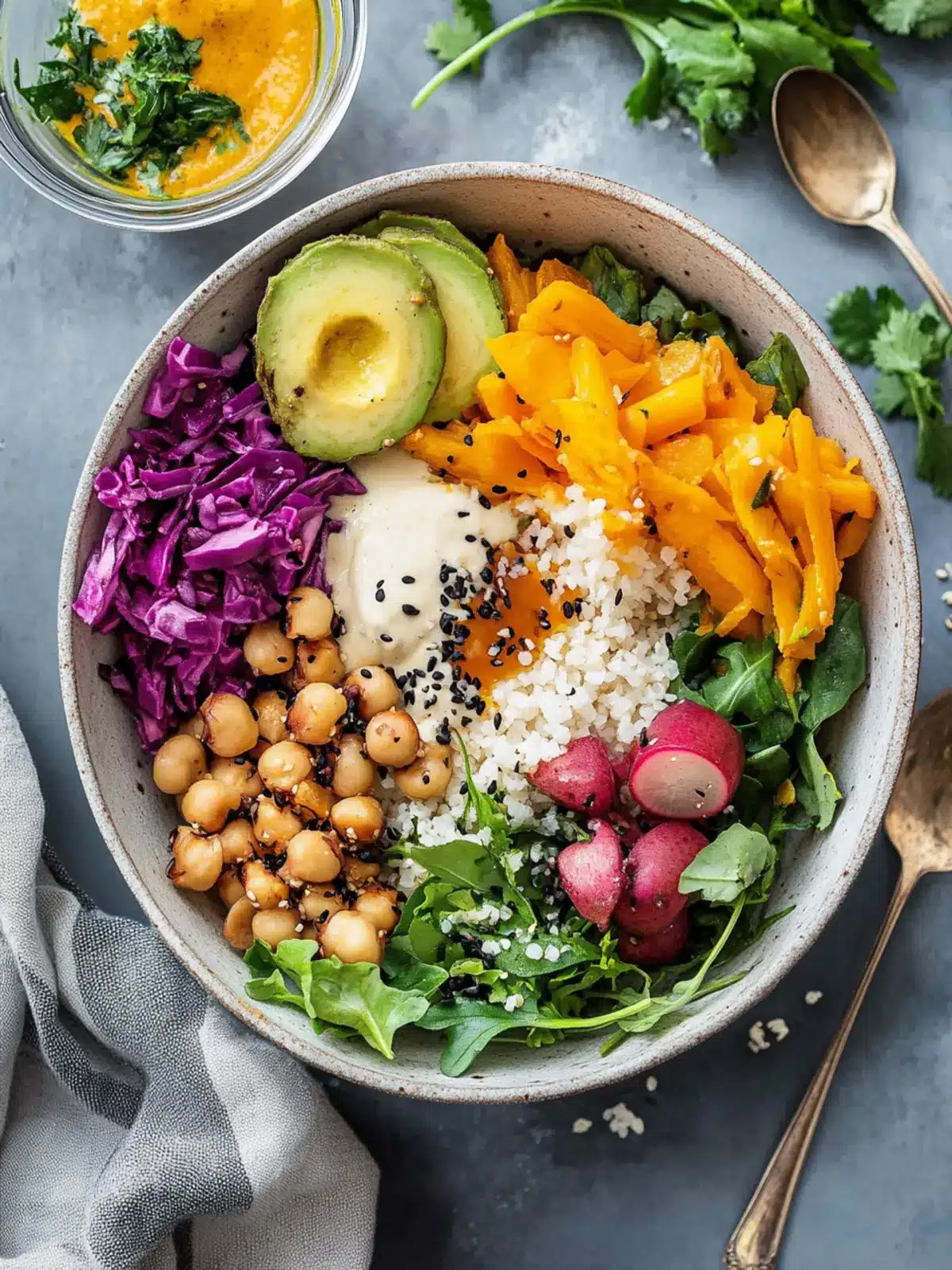
Assemble individual bowls by layering the cooked grains, chickpeas, massaged kale, carrot ribbons, sliced radishes, shredded cabbage, roasted sweet potatoes, and a spoonful of sauerkraut on top.
Drizzle the turmeric tahini sauce generously over each bowl and finish with a sprinkle of sesame or hemp seeds for that extra touch.
Optional: Garnish with microgreens for a fresh burst of flavor.
Exact quantities are listed in the recipe card below.
Buddha Bowl Variations
Feel free to get creative with this dish and make it your own with these fun twists!
- Dairy-Free: Substitute tahini with cashew cream for an extra creamy texture, perfect for those craving a rich flavor.
- Grain Swap: Try farro or barley instead of brown rice or quinoa for a different nutty flavor and chewy texture that elevates each bite.
- Spice it Up: Add a pinch of cayenne or sliced jalapeños for a delightful kick that’ll turn up the heat and excitement in your bowl.
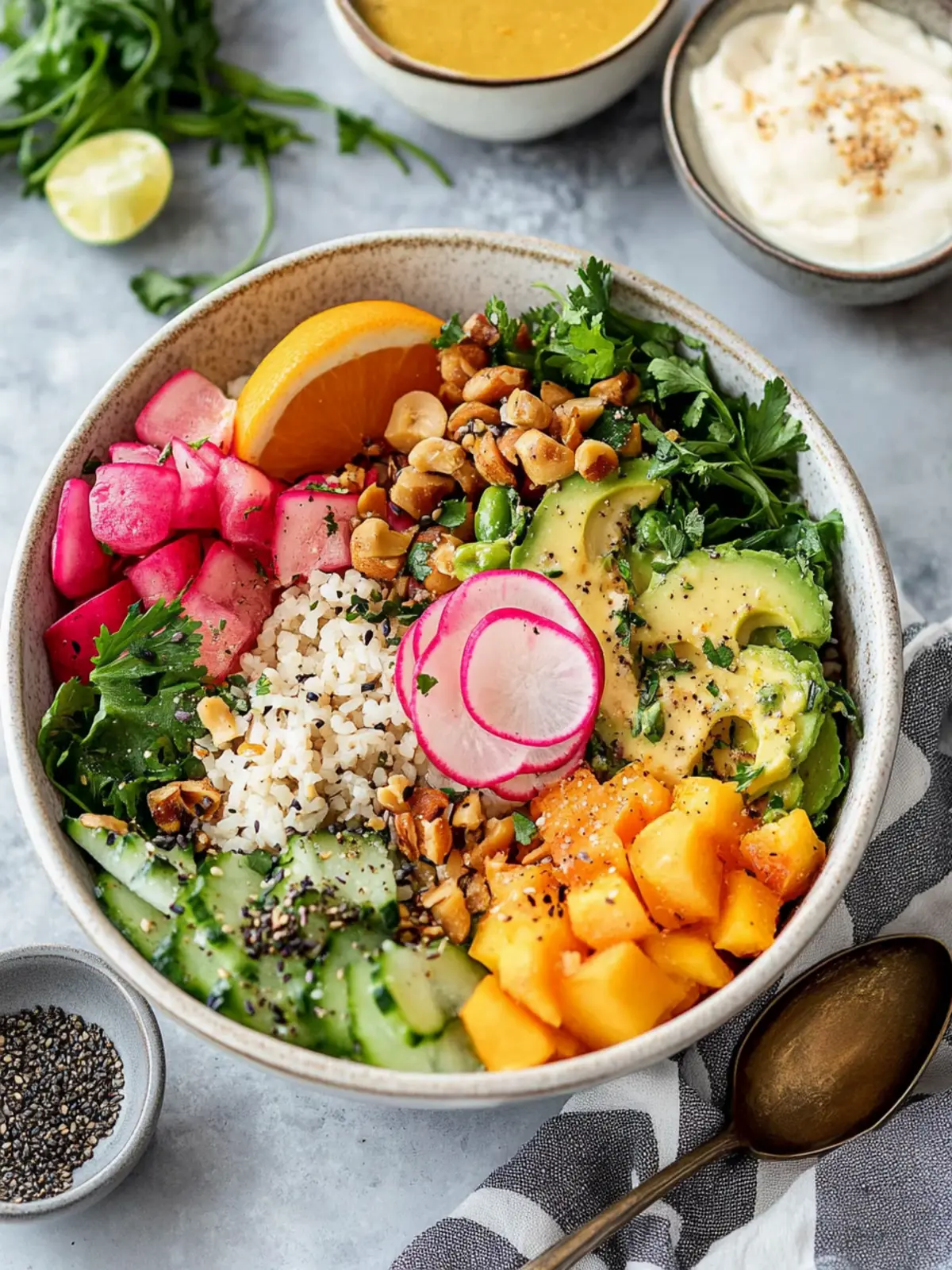
- Nutty Crunch: Toss in some roasted almonds or walnuts for added crunch and healthy fats that make every spoonful satisfying.
- Seasonal Fruits: Incorporate fresh summer fruits such as sliced strawberries or peaches to add a sweet twist and beautiful color to your bowl.
- Herb Boost: Sprinkle in fresh herbs like cilantro or basil to elevate the flavors and add a refreshing burst with each bite.
- Fermented Alternatives: Replace sauerkraut with pickled red onions or fermented carrots for a tangy twist that enhances digestion and flavor.
- Zesty Dressing: Swap the turmeric tahini with a lemon-tahini dressing for a brighter flavor profile that dances on your palate with lightness.
These variations not only personalize your bowl but also invite a delightful blend of flavors and textures that will keep your taste buds dancing!
What to Serve with Vegan Buddha Bowl?
Elevate your dining experience with delicious sides and drinks that perfectly complement your vibrant vegan dish.
Crispy Roasted Brussels Sprouts: The nutty flavor and crunch of Brussels sprouts brings an earthy balance, enhancing the overall meal experience.
Quinoa Salad: Packed with fresh herbs and a light vinaigrette, this salad adds a refreshing element to your bowl. Each bite offers a burst of flavor that balances the richness of the tahini sauce.
Garlic Breadsticks: Warm, buttery breadsticks provide a hearty side that everyone adores, perfect for soaking up any leftover sauce goodness!
Lemonade Iced Tea: This refreshing drink combines the zest of lemon with the comfort of tea, creating a revitalizing and thirst-quenching companion for your Buddha bowl.
Avocado Toast: Creamy and rich, avocado toast brings a delightful creaminess that echoes the creamy tahini sauce, while also offering a satisfying crunch.
Fruit Sorbet: A light and fruity dessert, sorbet serves as a sweet conclusion to your meal, cleansing the palate with its refreshing burst of flavor.
Remember, the idea is to create a symphony of textures and flavors that all harmonize beautifully with your nutrient-packed Buddha bowl!
Expert Tips for the Best Buddha Bowl
Kale Massage: Always massage kale well with lemon juice and salt; this helps break down its fibrous texture, making it tender and enjoyable.
Roasting Perfection: Keep an eye on the sweet potatoes; roasting times may vary based on size. Look for a golden color and softness to ensure they’re done.
Flavor Balance: Consider adding a pinch of salt to every layer during assembly to enhance flavors throughout the bowl. This little tip makes a big difference!
Ingredient Substitutions: Don’t hesitate to swap out ingredients based on availability; this Buddha bowl recipe is incredibly adaptable, so use what you love.
Serving Size: For meal prep, portion each ingredient separately. This keeps everything fresh and allows for easy assembly when ready to eat.
Sauce Variation: Experiment with your favorite sauces; try a spicy tahini or a sesame dressing for a flavorful twist on the classic turmeric tahini.
Make Ahead Options
These Buddha bowls are perfect for busy home cooks looking to save time during the week! You can prep the roasted sweet potatoes and cooked grains up to 3 days in advance—just store them in airtight containers in the fridge to maintain their freshness. Notably, slice the radishes and carrots and toss them with lemon juice so they stay vibrant. The massaged kale can also be prepared and refrigerated for up to 24 hours. When you’re ready to serve, simply assemble your bowls with all the components—layering the grains, veggies, chickpeas, and sauerkraut—then drizzle with the zesty turmeric tahini sauce for a deliciously satisfying meal!
How to Store and Freeze Buddha Bowl Recipe
- Fridge: Store assembled Buddha bowls in airtight containers for up to 5 days. Keep ingredients layered separately to maintain freshness and texture until ready to eat.
- Freezer: If you want to freeze components, store roasted sweet potatoes, grains, and chickpeas in freezer-safe bags for up to 3 months. Thaw before reheating for fresh flavors.
- Reheating: To reheat, microwave individual portions until heated through, about 1-2 minutes. Add fresh ingredients like greens, radishes, or sauce post-heating to retain crispness.
- Make-Ahead Tips: For meal prep, store individual components in separate containers. Assemble your Buddha bowl right before serving to enjoy the best flavors and textures!
Buddha Bowl Recipe FAQs
How do I choose ripe ingredients for my Buddha bowl?
Absolutely! When selecting ingredients, look for sweet potatoes that are firm without dark spots or cracks. Choose radishes that are bright and crisp, while kale should be vibrant green and fresh without wilting. For the best flavor in your grains, ensure your chickpeas and any other beans are plump and free of imperfections.
What’s the best way to store leftovers of my Buddha bowl?
Very! Store any assembled Buddha bowls in airtight containers, and they will stay fresh for up to 5 days in the fridge. I recommend keeping ingredients separated, especially the sauerkraut and sauce, until you’re ready to eat. This keeps everything crisp and vibrant, ensuring you enjoy every delicious bite.
Can I freeze components of my Buddha bowl?
Absolutely! You can freeze roasted sweet potatoes, cooked grains (like brown rice or quinoa), and chickpeas. Place them in freezer-safe bags for up to 3 months. When you’re ready to enjoy, thaw the components in the fridge overnight before reheating. This way, you retain all the wonderful flavors and textures.
What if my kale isn’t tender enough when massaging?
If your kale still feels tough after massaging, try sprinkling a bit more salt and continue massaging with lemon juice, giving it a few extra minutes. You can also let it sit for about 10 minutes after massaging to further soften. This step is crucial for achieving a satisfying texture in your bowl!
Are there any dietary considerations I should keep in mind?
Absolutely! This Buddha bowl recipe is vegan and gluten-free, making it friendly for many dietary restrictions. If you’re serving it to pets, be cautious with sauerkraut and garlic, as they can be harmful to animals. Additionally, always check for allergies—swap ingredients as necessary to accommodate any dietary needs.
Can I customize my Buddha bowl for different flavors?
Very! This Buddha bowl recipe is incredibly versatile; feel free to swap out grains based on your preference, such as using quinoa or barley. For a spicy kick, you might consider adding red pepper flakes to the tahini sauce or incorporating chili oil in place of the olive oil while roasting. Get creative with seasonal veggies for a fresh twist!
Flavorful Buddha Bowl Recipe for Vibrant Vegan Meals
Ingredients
Equipment
Method
- Preheat your oven to 400°F and line a baking sheet with parchment paper.
- Toss cubed sweet potatoes with extra-virgin olive oil, salt, and pepper. Spread them out on the baking sheet, roasting for about 20 minutes until golden brown and tender.
- Slice watermelon radish thinly and create ribbons from the carrots using a vegetable peeler. Toss both with lemon juice.
- Massage kale leaves with lemon juice and salt until tender.
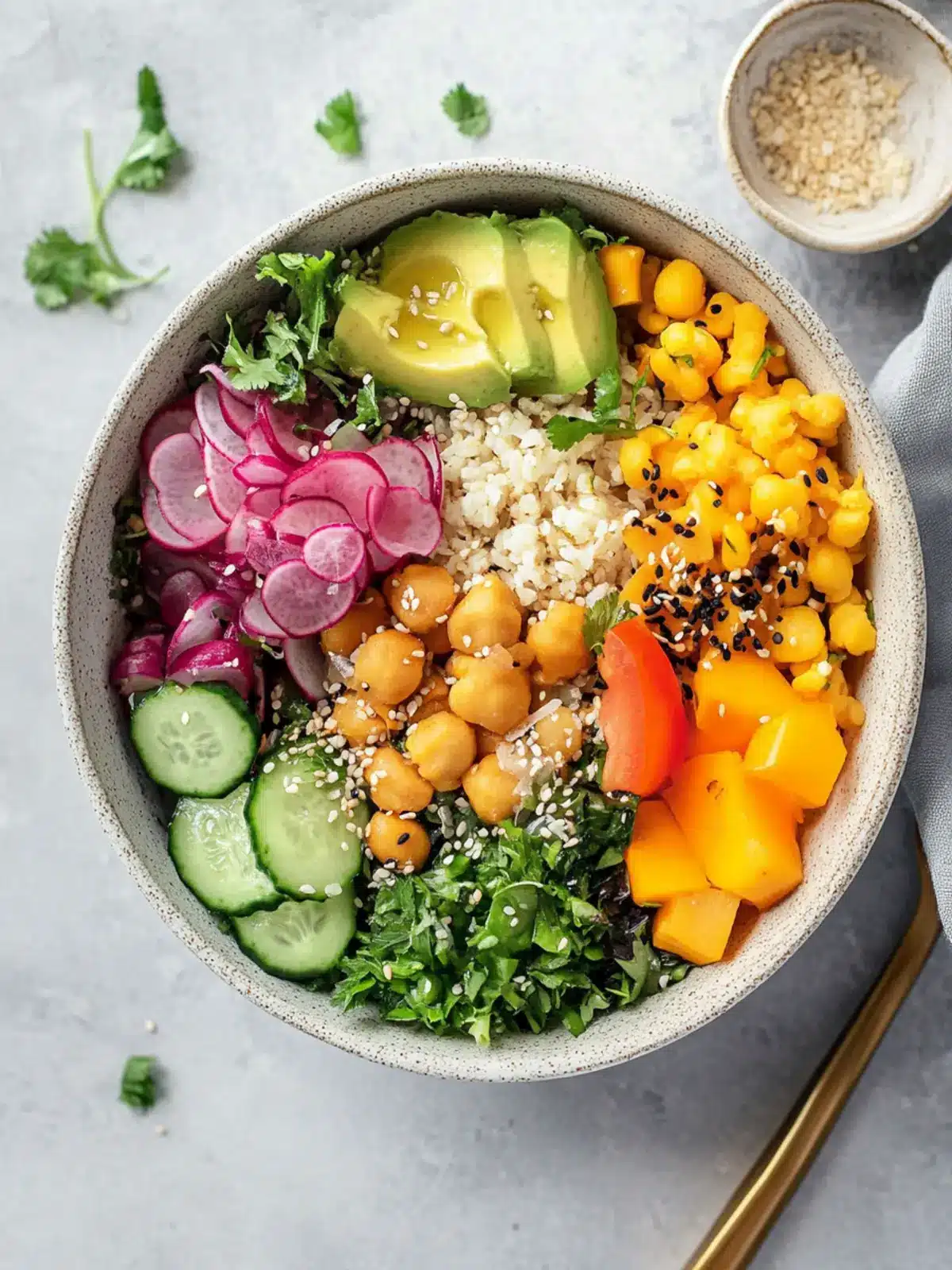
- Assemble bowls by layering cooked grains, chickpeas, kale, carrots, radish, cabbage, roasted sweet potatoes, and sauerkraut.
- Drizzle turmeric tahini sauce over each bowl and sprinkle with sesame or hemp seeds.
- Garnish with microgreens if desired.