
The first hint of spring in the air always brings back memories of colorful eggs and sweet treats. This year, as Easter approaches, I found myself craving something simple yet decadent—like homemade peanut butter eggs that are as delightful to make as they are to eat. It’s amazing how the sound of graham crackers being crushed and the aroma of melted chocolate can transform an ordinary kitchen into a festive haven.
These peanut butter eggs are not just any candy; they’re a masterpiece of flavors, blending the sweetness of creamy chocolate with the perfectly crumbly, salty-sweet peanut butter filling. With no baking required, they come together effortlessly for a fun family activity or an impressive dessert for your holiday gatherings. Plus, once you experience the joy of crafting homemade treats, there’s no going back to store-bought! Let’s embark on this delicious adventure and create some charming, pastel-coated peanut butter eggs that will surely steal the show this Easter!

Why are peanut butter eggs a must-try?
Homemade Delight: Craft these decadent treats effortlessly in your own kitchen without any baking—perfect for all skill levels!
Sweet and Salty Harmony: The combination of creamy chocolate and crumbly peanut butter filling creates an irresistible explosion of flavors.
Family Fun: Get the kids involved in crafting colorful designs—it’s a delightful way to bond during the Easter season.
Impressive Presentation: With appealing pastel colors, these eggs are not just delicious; they’re also visually stunning for any holiday gathering.
Storage Friendly: They keep well for up to two weeks, making them an ideal make-ahead treat.
Experience creating something truly special this Easter that will have everyone reaching for seconds!
Peanut Butter Eggs Ingredients
For the Filling
- Graham Crackers – Provide structure and crunch to the filling. Can be substituted with ground oats for a gluten-free option.
- Smooth Peanut Butter – Offers the characteristic creamy nutty flavor. Natural peanut butter can be used for a healthier option.
- Powdered Sugar – Adds sweetness and helps bind the filling. Granulated sugar can be used if powdered sugar is not available, but the texture may differ.
- Vanilla Extract – Enhances the flavor profile. Almond extract can be used as an alternative for a different flavor nuance.
- Unsalted Butter – Contributes to the creaminess and richness of the filling. Margarine or a dairy-free spread can be used for a vegan option.
- Salt – Balances sweetness and enhances flavors. Leave out if making a no-salt version.
For the Coating
- Colored Candy Coating Melts – Used for decorating the inside of the egg molds. Any color of candy melts can create different designs.
- Chocolate Candy Coating Melts – Forms the outer shell. Milk chocolate or dark chocolate can be substituted based on preference.
Now, let’s gather these ingredients and create some delightful peanut butter eggs that will be the highlight of your Easter festivities!
How to Make Peanut Butter Eggs
Prepare the Filling: Crush graham crackers finely in a food processor or with a rolling pin. In a mixing bowl, combine the crushed graham crackers, smooth peanut butter, powdered sugar, vanilla extract, unsalted butter, and salt. Mix until smooth and slightly crumbly, then refrigerate the mixture for about 30 minutes to firm up.
Mold Decoration: Clean and dry your silicone egg molds. Melt the colored candy coating melts according to package instructions. Use a brush, spoon, or your fingers to create fun designs inside the molds, making sure to have the chocolate adhere well. Refrigerate the decorated molds until the designs are set, usually about 10-15 minutes.
Form Chocolate Shells: Melt the chocolate candy coating melts carefully, avoiding overheating. Using a brush or spoon, coat the inside of each mold with a thick layer of melted chocolate. Place the molds back into the refrigerator until the chocolate hardens completely, roughly 15-20 minutes.
Fill the Molds: Once the chocolate shell is solid, add a generous layer of your chilled peanut butter filling into each mold, leaving a small margin at the top. Seal each egg with more melted chocolate to ensure it’s fully covered, then refrigerate again until firm.
Set and Finish: Place the filled molds back into the refrigerator for another 30 minutes or until the chocolate is shiny and fully set. Gently flex the molds to release the eggs and serve them at room temperature, ready to make your Easter celebration even sweeter!
Optional: Drizzle extra melted chocolate on top for an added decorative touch.
Exact quantities are listed in the recipe card below.
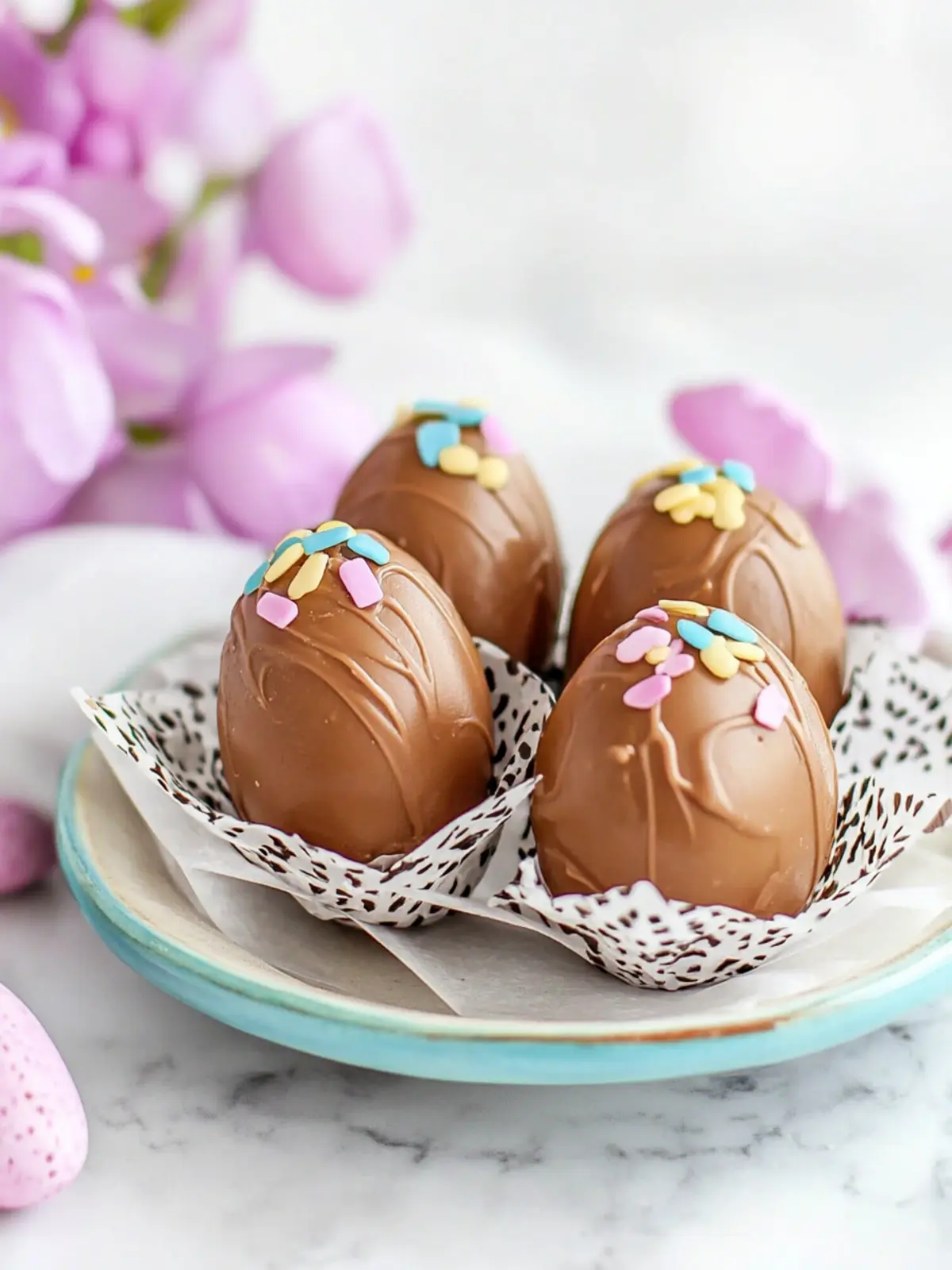
What to Serve with Peanut Butter Easter Eggs?
Elevate your Easter celebration with delightful accompaniments that perfectly complement these decadent treats.
- Fruit Salad: A fresh medley of seasonal fruits adds a vibrant, refreshing contrast to the rich flavors of the peanut butter eggs.
- Vanilla Ice Cream: The creamy, cold texture of vanilla ice cream creates a delicious harmony with the warmth of peanut butter, perfect for a festive dessert.
- Chocolate Hazelnut Spread Toast: Slather toasted bread with chocolate hazelnut spread for a crunchy delight that echoes the sweet chocolate coating of the eggs.
- S’mores Dip: Serve this gooey, warm dip with graham crackers for a fun dessert experience that mirrors the egg’s flavors while adding a unique twist.
- Coffee or Espresso: A hot, rich coffee drinks well with the creamy peanut butter, enhancing the overall experience with its aromatic and bold notes.
- Carrot Cake Muffins: These soft, spiced muffins introduce a subtle sweetness and fun texture, making a delightful pairing with the creamy richness of peanut butter eggs.
- Chocolate Milkshake: An indulgent milkshake adds a fun, nostalgic touch, while its cold creaminess balances the richness of the peanut butter filling.
- Lemonade or Iced Tea: Bright, tangy drinks like lemonade or lightly brewed iced tea cleanse the palate and provide refreshing notes alongside the sweet treats.
- Mini Cheesecakes: These luscious desserts offer a creamy, rich counterpart to the crunchy exterior of the peanut butter eggs, creating a perfect dessert spread.
How to Store and Freeze Peanut Butter Eggs
Room Temperature: Keep the peanut butter eggs in a cool, dry place in an airtight container for up to 2 weeks. This will maintain their delicious texture and flavor.
Fridge: For longer freshness, store the eggs in the refrigerator in an airtight container, where they will last up to 1 month. Allow them to come to room temperature before serving for the best taste.
Freezer: If you want to prepare ahead, these peanut butter eggs can be frozen for up to 3 months. Ensure they are wrapped tightly in plastic wrap and then placed in a freezer-safe bag.
Reheating: No need for reheating; simply thaw in the fridge overnight and enjoy these delightful treats!
Expert Tips for Peanut Butter Eggs
Chill Thoroughly: Ensure the peanut butter filling is well-chilled before molding. This helps maintain its shape and prevents messiness during assembly.
Melt with Care: When melting chocolate, do it slowly over low heat. Overheating can cause the chocolate to seize, ruining the creamy coating for your peanut butter eggs.
Use Silicone Molds: Opt for silicone molds as they’re flexible and make it easier to release the peanut butter eggs without breaking them.
Be Creative: Don’t hesitate to experiment with different candy melt colors or fillings! This personalize your peanut butter eggs and impress your guests.
Measure Accurately: Using a scale for your powdered sugar ensures consistency in texture and sweetness. This is essential for achieving the perfect balance in your peanut butter eggs.
Make Ahead Options
These peanut butter eggs are a fantastic choice for meal prep, allowing you to enjoy homemade treats with minimal last-minute effort! You can prepare the filling and refrigerate it for up to 3 days in advance; simply ensure it’s stored in an airtight container to maintain its lovely texture. Additionally, you can decorate the molds and melt the chocolate candy coating up to 24 hours ahead. Keep the decorated molds in the fridge to avoid any colors bleeding into one another. When you’re ready to assemble, fill the molds with the chilled peanut butter mixture and seal with more chocolate. In no time at all, you’ll have delectable peanut butter eggs that are just as delicious as when freshly made!
Peanut Butter Eggs Variations
Feel free to get creative and customize these delightful peanut butter eggs to suit your palate!
Nutty Crunch: Fold in crushed almonds or walnuts for a delightful texture and flavor boost.
Coconut Twist: Add shredded coconut into the filling for a tropical vibe that complements the peanut butter perfectly. Your taste buds will dance with delight!
Dairy-Free Delight: Use dark chocolate or dairy-free chocolate melts to accommodate a vegan lifestyle without compromising flavor.
Flavor Fusion: Swap out vanilla extract for almond or coconut extract to elevate the flavor profile and surprise your guests with something unique.
Spicy Kick: Mix a pinch of cayenne or chili powder into the peanut butter filling for an unexpected, delicious heat that contrasts beautifully with the sweetness.
Fruit Infusion: Add in finely diced dried fruits like cranberries or apricots to the filling for a sweet and chewy surprise in every bite.
Gourmet Touch: Drizzle melted caramel or chocolate on top of the finished eggs for an extra layer of sweetness that makes them stand out.
Colorful Coating: Instead of a solid color, use two or more shades of candy melts to create a marbled effect for a visually stunning presentation.
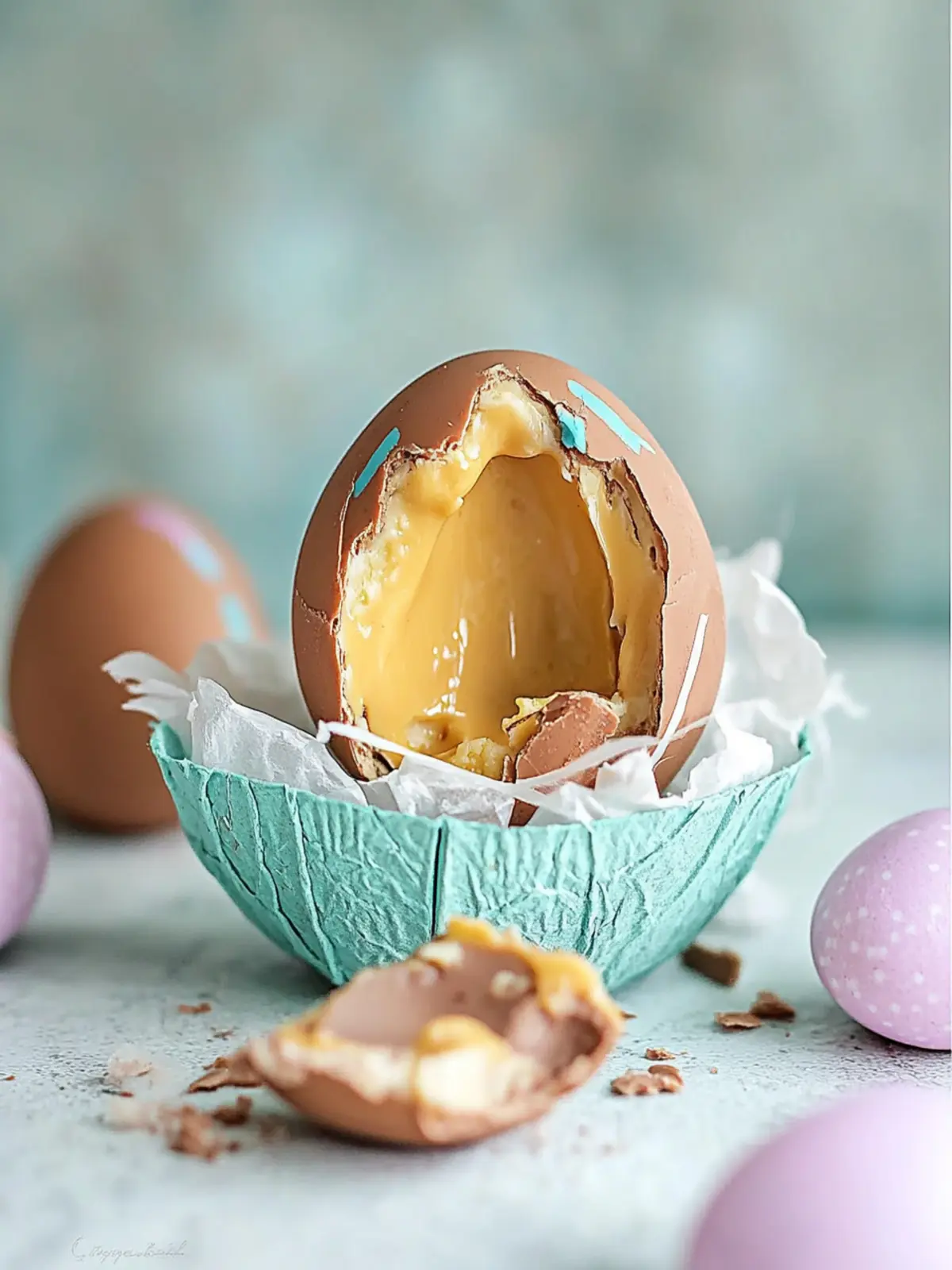
Peanut Butter Easter Eggs Recipe FAQs
What is the best way to select ripe ingredients for peanut butter eggs?
Absolutely! For the best flavor, always use fresh and high-quality ingredients. Check the graham crackers for no visible dark spots or signs of staleness, and opt for a creamy, natural peanut butter without added sugars. If using butter, ensure it’s creamy and not overly hard or soft for blending.
How should I store peanut butter eggs, and for how long will they last?
You can store your peanut butter eggs in an airtight container at room temperature for up to 2 weeks. If you want to keep them for longer, I recommend refrigerating them, where they will stay fresh for up to a month. Just make sure to let them come to room temperature before indulging for the best flavor.
Can I freeze peanut butter eggs, and if so, how?
Yes, you absolutely can! To freeze peanut butter eggs, wrap each egg tightly in plastic wrap and then place them in a freezer-safe bag. They can maintain their delightful flavors for up to 3 months. When you’re ready to enjoy, just thaw them in the refrigerator overnight, and they’ll be perfect for a tasty treat!
What should I do if my chocolate coating is too thick or not sticking?
If your chocolate coating is too thick, try adding a tiny bit of vegetable oil or shortening to it while melting; this can help thin it out for a smoother consistency. When applying the chocolate, make sure the outside of the mold is clean, so the chocolate adheres perfectly. Allow each layer to set properly before moving on to the next step.
Are there any allergies to consider when making peanut butter eggs?
Definitely! Be cautious with allergies, particularly to peanuts. If you’re making these for others, it’s good practice to ask about peanut allergies. You can substitute with sunflower seed butter for a nut-free option. Additionally, ensure that any other ingredients, like chocolate melts, are gluten-free or vegan if needed. Always check packaging for allergen information.
Can I change the flavors in my peanut butter eggs?
Very much so! You can play around with different flavor extracts like almond or coconut for a fun twist. Consider adding ingredients like crushed nuts, sprinkles, or even flavored chocolate for a unique touch. The more, the merrier when it comes to creativity in your kitchen!
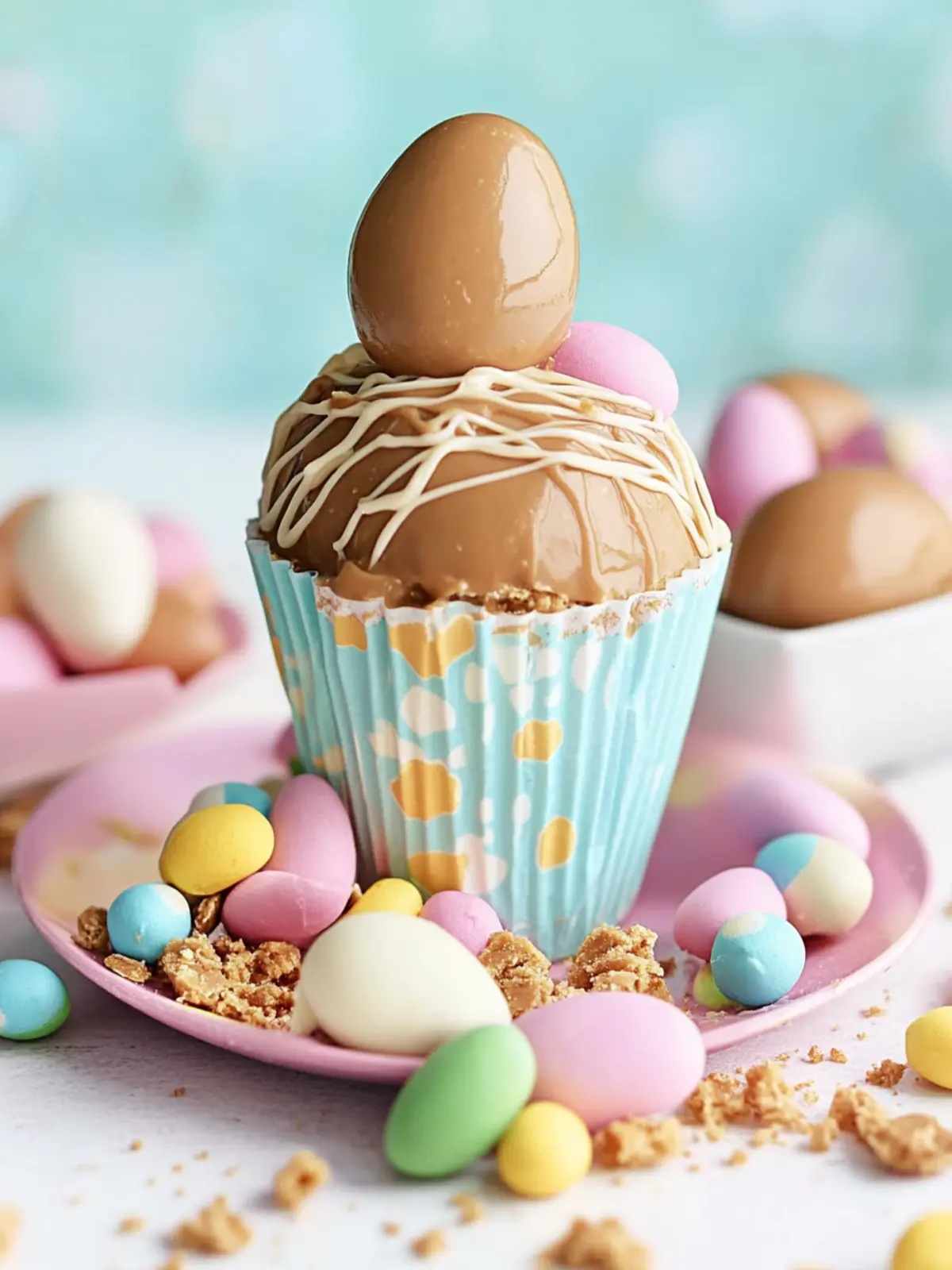
Decadent Peanut Butter Eggs: Homemade Easter Delight
Ingredients
Equipment
Method
- Crush graham crackers finely in a food processor or with a rolling pin. In a mixing bowl, combine the crushed graham crackers, smooth peanut butter, powdered sugar, vanilla extract, unsalted butter, and salt. Mix until smooth and slightly crumbly, then refrigerate the mixture for about 30 minutes to firm up.
- Clean and dry your silicone egg molds. Melt the colored candy coating melts according to package instructions. Use a brush, spoon, or your fingers to create fun designs inside the molds, making sure to have the chocolate adhere well. Refrigerate the decorated molds until the designs are set, usually about 10-15 minutes.
- Melt the chocolate candy coating melts carefully, avoiding overheating. Using a brush or spoon, coat the inside of each mold with a thick layer of melted chocolate. Place the molds back into the refrigerator until the chocolate hardens completely, roughly 15-20 minutes.
- Once the chocolate shell is solid, add a generous layer of your chilled peanut butter filling into each mold, leaving a small margin at the top. Seal each egg with more melted chocolate to ensure it's fully covered, then refrigerate again until firm.
- Place the filled molds back into the refrigerator for another 30 minutes or until the chocolate is shiny and fully set. Gently flex the molds to release the eggs and serve them at room temperature, ready to make your Easter celebration even sweeter!